

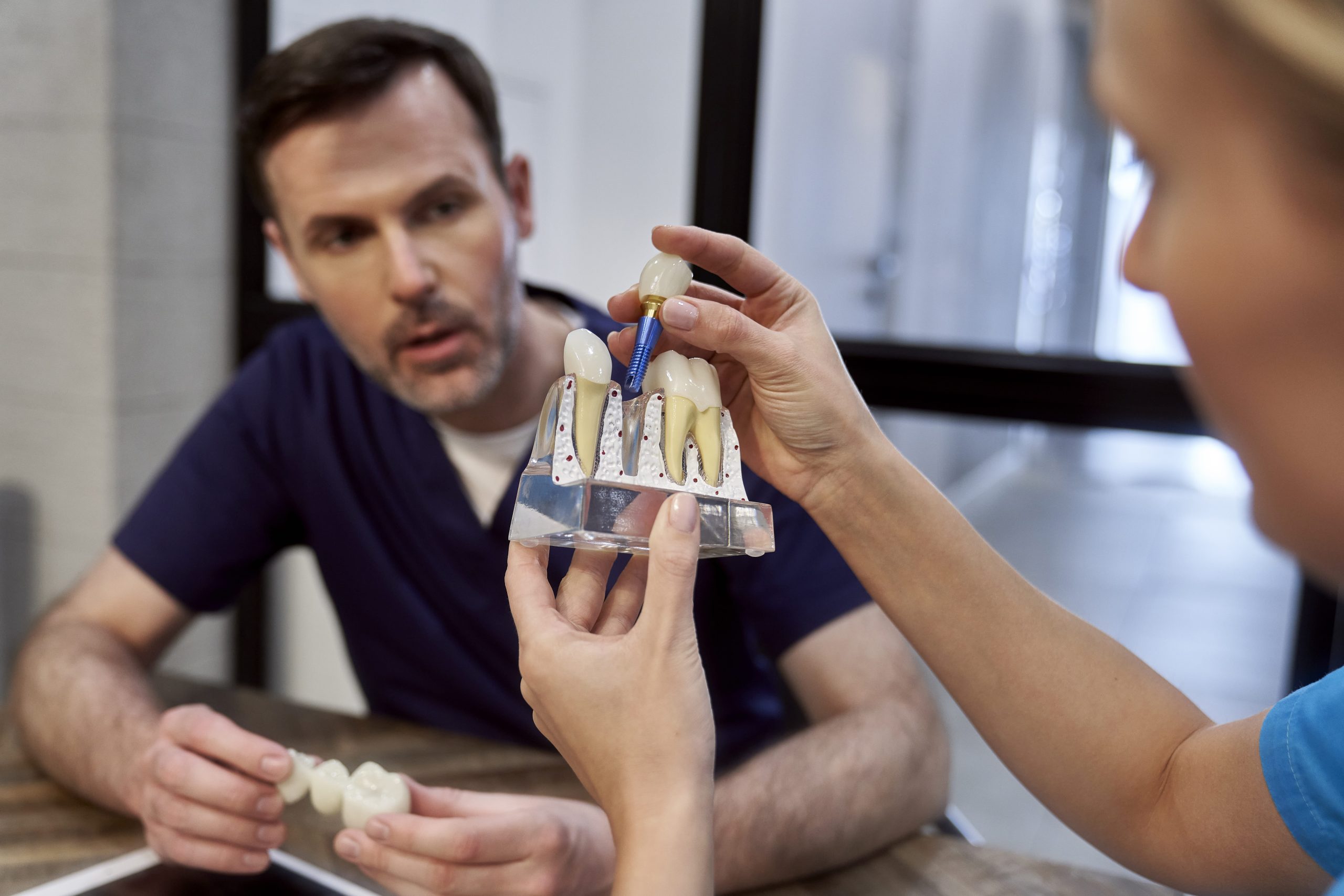
Maybe you’ve started chewing on one side because the gap on the other side doesn’t feel right. When you have multiple missing teeth, meals and smiles can start to feel like a workaround. A dental implant bridge is one way to fill that gap.
This guide explains how a dental implant bridge works and how it differs from a traditional bridge. It also covers who may suit this treatment, what the stages involve, and how to care for your implants.
What Is a Dental Implant Bridge?
A dental implant is a metal screw that works like a tooth root. It’s placed in your jawbone. Over about three months, the bone grows around it to hold it in place, as Healthdirect explains.
An implant bridge, also called an implant-supported bridge, uses two or more of these implants. They hold a row of joined crowns in place. A laboratory makes the crowns to match the teeth around them, so together they fill the whole gap. This is how dental implants for multiple teeth can work, with one bridge replacing several teeth at once.
How many implants you need depends on your mouth. That’s why your dentist plans it with you after an assessment.
How an Implant Bridge Differs From a Traditional Bridge
Both types of bridges fill a gap with joined crowns. The difference is what holds them in place.
A traditional bridge attaches to the teeth on either side of the gap. According to Healthdirect, dentists usually file down two healthy teeth to prepare for it. Implants in the jawbone hold an implant bridge instead, so treatment doesn’t involve the teeth next door.
That doesn’t make one option right for everyone. A traditional bridge needs healthy teeth beside the gap, while an implant bridge needs enough bone to hold the implants. Your dentist can talk you through both.
Related: If only one tooth is missing, read Single Tooth Implants vs Dental Bridges.
Who May Suit a Dental Implant Bridge?
An implant bridge is one way to replace several missing teeth at once. Other tooth replacement options include traditional bridges and dentures, so start with a chat about your goals so they can understand your case.
Not everyone can have implants. Before suggesting treatment, your dentist will look at a few things:
- Whether you have enough jawbone to hold the implants
- Whether your gums are healthy
- Your health history, including any medicines you take
- Your X-rays or 3D scans, which show the bone and where each implant could go
Once your dentist has finished those checks, they can tell you whether an implant bridge may suit you.
What the Treatment Looks Like
Treatment happens in stages over a few months, which gives you time to ask questions along the way. Here’s the usual order, based on Healthdirect’s guide to dental implants:
- Assessment: X-rays or 3D scans, a check of your bone and gums, and a talk about your goals.
- Planning: Your dentist works out how many implants you need and where they’ll go, then explains the costs.
- Placing the implants: The implants go into your jawbone in a minor operation, under local anaesthetic.
- Healing: Over about three months, your bone grows around the implants.
- Making the bridge: While you heal, a laboratory makes your bridge to match your other teeth.
- Fitting the bridge: Once the implants are secure, your dentist attaches the bridge.
- Check-ups: Regular visits let your dentist keep an eye on your implants and gums.
Everyone heals at their own pace, so your dentist will explain the timing for your plan.
What to Expect Afterwards
Straight after your dentist places the implants, you may notice some pain, bruising and swelling in your gums or face. There can be a little bleeding too. These effects are quite normal right after your implant surgery, and will eventually subside as you heal.
Your dental team will give you instructions to follow. These might include using mouthwash instead of a toothbrush or floss for two to three weeks. Your dental team may also ask you to eat soft foods while the area heals.
Every surgical treatment carries risks. Possible problems include infection, nerve damage, sinus problems, and injury to nearby teeth. Your dentist will go through these with you before you decide, so you can ask anything that’s on your mind.
Caring for Your Implant Bridge
Once your implants have healed, you look after them much like your natural teeth. A simple routine helps keep your gums healthy:
- Brush twice a day, right down to the gumline.
- Clean between your implants and nearby teeth every day, using floss, interdental brushes or a water flosser.
- Ask your dentist to show you how, because the method can change for an implant bridge.
- Book regular check-ups and professional cleans.
If cleaning between your teeth feels fiddly, our guide to interdental brushes explains how to choose and use them.
Your Next Step Towards Replacing Missing Teeth
A dental implant bridge uses two or more implants to hold a row of joined crowns. That means it can fill a gap without relying on the teeth besides it. Whether it suits you depends on your bone, gums and health. A conversation with your dentist is where that starts.
Our team at Greenslopes Dental Studio has cared for local families since 2004. In our family-room-style studio, you’re welcome to ask as many questions as you like for a more informed decision.
If you’re curious about dental implants, our caring team will talk you through your consultation. When you’re ready, book an appointment online or call us on 07 3733 3555. Payment plans are available for most services, so ask us about your options.
Frequently Asked Questions
How Much Does a Dental Implant Bridge Cost?
The cost depends on your own treatment plan, so it differs from person to person. Healthdirect says dental implants can be expensive, so it’s wise to know all the costs before you start.
Your dentist can explain them and give you a quote. It’s also worth checking whether your private health insurance covers some of the cost. Payment plans are available for most services at our studio.
How Long Does a Dental Implant Bridge Last?
No dentist can promise how long dental work will last. It depends on your mouth and how you care for it. The Australian Dental Association says implants can’t get tooth decay, but gum disease can still affect them.
Inflammation of the gums and bone loss around an implant may also happen, and it needs treatment. When left untreated, it can make an implant loose or even cause it to fail.
Can I Have a Dental Implant Bridge If I Smoke or Have Gum Disease?
The Australian Dental Association says you may not suit implants if you smoke or have severe gum disease. Healthdirect also lists diabetes and osteoporosis as things that may raise the chance of infection or other problems. Some medicines can matter too.
Tell your dentist about your full health history so they can assess you properly.
Is a Dental Implant Bridge Removable?
Healthdirect describes dental bridges as fixed in place, unlike dentures that you can take out. Implant-supported bridges are one type of bridge. A bridge joins its crowns together, so floss can’t pass between them.
Your dentist may suggest superfloss, floss threaders or interdental brushes to clean underneath. They’ll show you what works for your bridge.
What Other Options Are There for Replacing Several Teeth?
Besides implants, the Australian Dental Association lists dentures and dental bridges as other ways to replace missing teeth. A partial denture is removable, while a traditional bridge is fixed to the teeth beside the gap. A full denture can also be held in place by implants.
Each option has advantages and disadvantages, so a consultation with your dentist can help you determine which one suits your mouth and your goals.
Who Can Place Dental Implants?
The Australian Dental Association says a general dentist, periodontist or oral surgeon may complete implant treatment. It’s fine to ask any clinic who will care for you and what’s involved.
Our guide to whether a general dentist can place dental implants explains more.
What Should I Ask My Dentist Before Treatment?
Healthdirect suggests taking time to ask questions before surgery. Your dentist needs to explain your options so you can give informed consent. You might ask how many implants you need, what the full costs are, and what the risks are. It’s also worth asking what care you’ll need afterwards.
Disclaimer: This article is general information only and isn’t a substitute for professional dental advice.
Important warning: Any surgical or invasive procedure carries risks. Before proceeding, you should seek a second opinion from an appropriately qualified health practitioner.


