

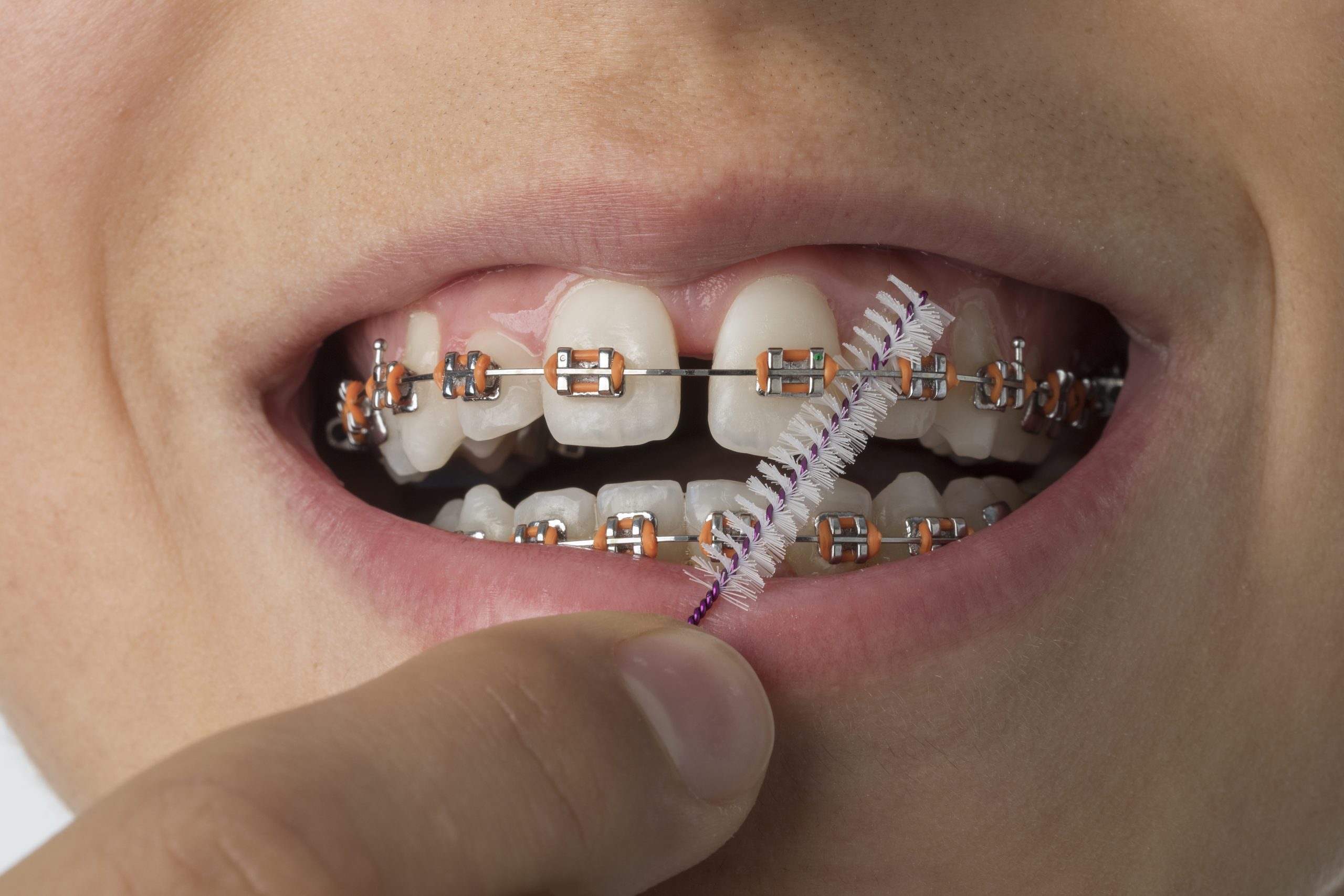
You brush twice a day, but your gums still bleed when you floss. Or perhaps you’ve seen tiny brushes in the chemist and wondered if they’re worth trying. It’s a common question, and a fair one.
Interdental brushes are small brushes made to clean the gaps between your teeth. This guide explains how to choose the right size and how to use interdental brushes safely. It also covers how they compare with floss. We’ll share when it’s time to check in with our team at Greenslopes Dental Studio.
What are interdental brushes?
An interdental brush has a thin handle and a tiny brush head. The head slides into the space between two teeth. It lifts away plaque and food that your toothbrush can’t reach.
Plaque is the soft, sticky film that builds up on teeth. If it stays in place, it can irritate your gums. Better Health Victoria describes gingivitis as early gum disease, with red, swollen gums that may bleed.
Interdental brushes vs floss
Both clean between your teeth, and both can be useful. A Cochrane review found low-certainty evidence that brushes may reduce gum inflammation more than floss. This was over one to three months. It didn’t find a clear difference for deeper gum disease.
Here’s a simple way to think about it:
- Wider gaps: Brushes tend to fit these spaces better.
- Very tight gaps: Floss may slide in more easily.
- **Braces, bridges and implants:** Brushes can reach around the hardware.
- Dexterity: Some people find a brush easier to hold than floss.
The right tool is the one you’ll use every day. Your dentist can help you pick, and some people use both.
How to choose the right size
Size matters more than most people expect. A brush that’s too big can hurt your gums, while one that’s too small won’t clean well. Some dentists use a small probe to measure your gaps and pick the right size for each one.
Interdental brush sizes usually come as a set, often shown by number or colour. The colours differ between brands, so don’t rely on them. Look at the size in millimetres on the pack instead.
Use these tips when you choose:
- Aim for a snug fit. The brush should slide in with light resistance. It shouldn’t need force.
- Expect more than one size. Front teeth often have smaller gaps than back teeth.
- Pick a straight or angled head. Angled heads can make the back teeth easier to reach.
- Choose soft bristles. They’re gentler on your gums.
- Start small. You can move up a size if the brush feels loose.
Also read: How to Look After Teeth With Dental Implants: A Patient’s Guide
How to use interdental brushes
Good technique matters as much as the right size. Take it slowly at first.
- Slide the brush in gently. Guide it into the gap at the gum line. Don’t push it hard.
- Move it back and forth. Two or three gentle passes is plenty.
- Don’t scrub. Hard scrubbing can irritate your gums.
- Rinse the brush. Wash off any plaque before the next gap.
- Work around your mouth. Clean each gap, using the right size for each one.
Cleaning between your teeth once a day is a common recommendation. Your dentist can tell you what suits your mouth.
Common mistakes to avoid
A few small habits can make the brushes less helpful:
- Forcing a brush that’s too big into a tight gap
- Using the same size for every gap in your mouth
- Using one brush for too long. Replace it when the bristles bend or wear
- Skipping the gaps that feel awkward to reach
- Giving up after a day or two of mild tenderness
Gums that bleed when you first start can be a sign of inflammation. It often settles with regular, gentle cleaning. If bleeding carries on after a week or two, it’s worth getting your gums checked.
When to see your dentist
Interdental brushes help with daily care, but they don’t replace a dental check-up. Book a visit if you notice any of these:
- Gums that bleed often
- Red, puffy or sore gums
- Gums that look like they’re pulling away from your teeth
- Bad breath that doesn’t go away
- A tooth that feels loose
Our guide to the signs of gum disease explains what to look for. Your dentist can also show you the right brush size during a check-up and clean.
Cleaning between your teeth is a small habit that can support your gum health. What counts is the right size, a gentle touch and a routine you can stick with every day. If something feels uncomfortable, stop and ask for help rather than pushing through.
Looking for a dentist in Greenslopes, Brisbane? Our team at Greenslopes Dental Studio can help you pick the right brush. A dental check-up and clean is a good time to ask. Book an appointment on our online booking page. Or call us on 07 3733 3555 to ask a question.
Frequently Asked Questions
How often should I use interdental brushes?
Once a day is a common recommendation. Your dentist may suggest more or less, depending on your gums and your teeth.
Are interdental brushes better than floss?
Not always. A Cochrane review found low-certainty evidence that brushes may reduce gum inflammation more than floss. Floss can suit very tight gaps, so some people use both.
Can I use interdental brushes with braces or implants?
Yes, many people do. Brushes can clean around braces, bridges and implants. Ask your dentist which size and style suit your teeth.
How often should I replace my interdental brush?
Replace it when the bristles look bent or worn. A worn brush may not clean as well. It’s also gentler to swap it early than to push on with a tired one.


