

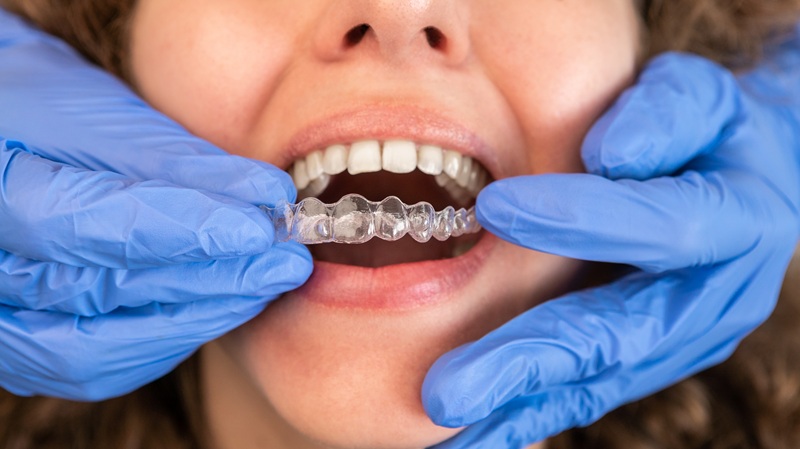
If you’ve been thinking about straightening your teeth, there’s a good chance Invisalign has come up in your research. It’s one of the most well-known clear aligner treatment options available today, but one of the most common questions we hear is: what can Invisalign treat, exactly?
The short answer is that Invisalign can address a wide range of mild to moderate orthodontic issues. But like any treatment, it has its strengths and its limits.
Understanding which dental issues Invisalign is best suited for, and where other options might be more appropriate, is a great first step toward making an informed decision about your smile.
Crowded Teeth
Crowding happens when there is not enough space in the jaw for your teeth to sit comfortably in alignment. This can cause teeth to overlap, twist, or push forward, making them harder to clean and more prone to decay over time.
Invisalign for crowded teeth is one of the most common uses of the treatment. The aligners work by applying gentle, controlled pressure to gradually shift teeth into better positions, creating more even spacing across the arch.
Invisalign is known to be a solution for mild to moderate crowding. However, more severe cases may require traditional orthodontic intervention, which your dentist can assess during a consultation.
Gaps Between Teeth
Spacing issues are another common concern that Invisalign can help with. Gaps can occur naturally, especially when it is a result of missing teeth or because of habits like thumb-sucking during childhood.
Invisalign for gaps between teeth works by gradually bringing the teeth closer together, closing the spaces over a series of aligner trays. Depending on the size and location of the gaps, treatment time can also vary, but many patients see visible improvements within the first few months of their Invisalign treatment.
Overbite and Underbite
Bite problems are more than just a cosmetic concern. They can also affect how you chew, how your jaw functions, and even how your teeth wear down over time.
An overbite occurs when the upper front teeth overlap significantly over the lower teeth, while an underbite is the reverse. Meaning, the lower teeth sit in front of the upper teeth.
Invisalign for overbite and underbite correction has come a long way in recent years. For mild to moderate cases, clear aligners for bite problems can be a suitable option, sometimes used alongside small attachments or rubber bands to guide the jaw into better alignment.
More complex bite issues may still require traditional braces or a combined treatment approach, which is why a thorough Invisalign suitability assessment with a qualified provider is so important before starting.
Crossbite
A crossbite occurs when some of the upper teeth sit inside the lower teeth rather than outside them. This can happen on one or both sides of the mouth and may lead to uneven wear, gum irritation, or jaw discomfort if left untreated.
In many cases, orthodontic correction with Invisalign can address mild to moderate crossbites by repositioning the affected teeth into proper alignment. As with other bite-related issues, the suitability of Invisalign will depend on the severity and complexity of the crossbite, which is something your dentist will evaluate as part of your initial assessment.
Open Bite
An open bite is when the upper and lower front teeth don’t touch when the mouth is closed, leaving a visible gap between them. This can affect speech, make biting into certain foods difficult, and contribute to other teeth alignment problems over time.
Invisalign treatment may be suitable for mild open bites, though more pronounced cases may benefit from a different or combined orthodontic approach.
Your dentist will be able to advise on the most appropriate path based on the specifics of your bite.
When Invisalign May Not Be the Right Fit
While Invisalign is a versatile treatment, it’s not the answer to every orthodontic concern. More complex cases, such as severe crowding, significant skeletal discrepancies, or teeth that need to be rotated substantially, may require traditional braces or other specialised orthodontic treatment.
It’s also worth noting that Invisalign requires commitment from the patient. The aligners need to be worn for 20–22 hours a day to be effective, and each new set of trays can come with a short adjustment period.
If you’re curious about what that feels like in practice, our guide on managing discomfort with new aligner trays covers practical tips for staying comfortable throughout treatment.
The best way to know whether Invisalign is right for your specific dental issues is to have a personalised consultation. Your dentist will examine your teeth, discuss your goals, and recommend the clear aligner treatment option or alternative that makes the most sense for you.
Take the First Step Toward a Straighter Smile
Invisalign treatment has helped millions of people around the world address a wide range of teeth alignment problems, from minor spacing concerns to more involved bite corrections. However, it’s still best to consult with a qualified Invisalign provider first before getting the treatment done.
If you’re looking for Invisalign in Greenslopes, QLD, Greenslopes Dental Studio can offer professional advice, as we are also a qualified Invisalign provider. We can guide you and assess if Invisalign is the right option for your dental issue.
Book a consultation with us today.
Frequently Asked Questions
Can Invisalign fix crowded teeth?
Yes, Invisalign is commonly used to treat mild to moderate crowding. The aligners gradually reposition overlapping or twisted teeth into better alignment over the course of treatment.
Does Invisalign work for bite problems?
Invisalign can address many bite issues, including mild to moderate overbites, underbites, crossbites, and open bites. More complex cases may require traditional braces or a combined approach.
How do I know if Invisalign is right for me?
The best way to find out is through a consultation with your dentist. They will assess your teeth, bite, and overall oral health to determine whether Invisalign is a suitable option for your specific needs.
How long does Invisalign treatment take?
Treatment time varies depending on the complexity of the case. Many patients complete their Invisalign treatment within 6 to 18 months, though your dentist will provide a more accurate timeline during your consultation.
Can Invisalign close gaps in my teeth?
Yes, Invisalign is also effective at closing gaps caused by spacing issues. The aligners gradually bring teeth together over a series of trays, and many patients notice visible improvements within the first few months.
However, more complex cases may be suitable for other orthodontic solutions. A consultation with a dentist is a crucial first step.

