

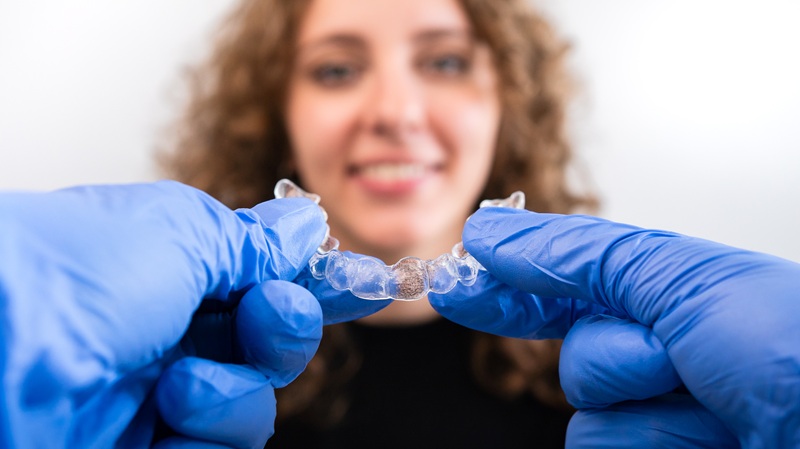
Starting your Invisalign journey is an exciting step toward a straighter, more aligned smile. But if you’ve just switched to a new set of aligner trays and noticed some pressure or tenderness, you’re not alone. A degree of discomfort when adjusting to clear aligners is completely normal, and the good news is, it’s usually mild and temporary.
Understanding why this happens and knowing how to manage it can make the experience much smoother. In this guide, we will walk you through what to expect during each Invisalign adjustment and share practical tips for easing aligner tray pressure along the way.
Why Do New Aligner Trays Feel Uncomfortable?
Each set of Invisalign trays is designed to gently shift your teeth a small amount closer to their final position. When you switch to a new tray, it applies fresh pressure to specific teeth. That is actually a sign that the treatment is working. Unlike traditional braces, which use fixed wires to apply constant force, clear aligners deliver pressure in stages with each new tray.
This new aligner tray pain or tightness typically peaks within the first day or two of wearing a new set and gradually eases as your teeth begin to settle into their adjusted position. Most people describe it as a feeling of pressure or mild soreness rather than sharp pain.
The level of clear aligner discomfort can vary from person to person and from tray to tray. Some sets may feel barely noticeable, while others might feel a little more snug. It all depends on the type of movement being made at that stage of your treatment.
Practical Tips for Managing Invisalign Discomfort
While some sensitivity is expected, there are plenty of simple strategies to help you feel more comfortable as you adjust. Here are some tried-and-true tips for new aligners:
Switch to New Trays in the Evening
One of the most common pieces of advice is to start wearing new aligner trays just before bed. This allows the initial period of tightness to pass while you sleep, so you wake up with much of the early Invisalign discomfort already behind you.
Use a Cold Compress
If you’re experiencing soreness around your jaw or gums, applying a cold compress to the outside of your cheek for 10–15 minutes can help reduce any mild inflammation and provide Invisalign soreness relief.
Stick to Soft Foods
During the first day or two of a new tray, your teeth may feel a little tender when biting down. Opting for softer foods, like soups, yoghurt, scrambled eggs, and smoothies, can ease the pressure on your teeth while they adjust.
Stay Consistent with Wear Time
It might seem tempting to take your aligners out when they feel tight, but keeping them in for the recommended 20–22 hours per day actually helps your teeth adjust faster. The more consistently you wear them, the quicker the orthodontic aligner adjustment period tends to pass.
Try Orthodontic Wax if Needed
If the edges of your trays are rubbing against your gums or inner cheeks, a small amount of orthodontic wax can smooth things over and prevent irritation. This is especially helpful during the first few days of wearing new aligner trays.
Rinse with Lukewarm Salt Water
A gentle saltwater rinse can soothe irritated gums and support overall oral comfort during the adjustment phase. Simply dissolve half a teaspoon of salt in a glass of lukewarm water and rinse for 30 seconds.
When Should You Contact Your Dentist?
While managing tooth movement pain at home is usually straightforward, there are times when it’s worth reaching out to your dental team. If your discomfort does not ease after a few days, if a tray feels like it does not fit properly, or if you notice any sharp or persistent pain, it’s a good idea to get in touch with them soon.
At Greenslopes Dental Studio, our team monitors your Invisalign progress at every stage. Regular check-ins allow us to ensure your trays are fitting well and your treatment is tracking as planned, so if something does not feel right, we’re here to help.
Go Through Discomfort with Guidance
Adjusting to Invisalign is a journey, and a little discomfort along the way is simply part of the process. Each new tray brings you one step closer to the smile you’re working toward, and most patients find that any soreness fades quickly once they settle into a routine.
If you’re considering Invisalign or have questions about how to ease aligner discomfort during your treatment, our friendly team at Greenslopes Dental Studio is always happy to help. Our team will take the time to assess your teeth thoroughly to achieve the smile you’re aiming for.
Book an appointment with our Invisalign-expert dentist to know whether clear aligners are appropriate for your case.
Frequently Asked Questions
Is it normal to feel pain with new Invisalign trays?
Some pressure and mild soreness is completely normal when you switch to a new set of aligners. This is a sign that your teeth are moving as planned. The discomfort usually settles within a couple of days.
How long does Invisalign discomfort last with each new tray?
Most patients find that the tightness and tenderness peak within the first 24–48 hours and gradually subsides over the following days as your teeth adjust to the new position.
Can I take painkillers for aligner discomfort?
Over-the-counter pain relief may help if you’re feeling uncomfortable, but it’s best to speak with your dentist before taking anything regularly. Simple home strategies like cold compresses and soft foods are often enough.
What if my aligner tray doesn’t seem to fit properly?
If a tray feels significantly off or is causing sharp discomfort, don’t force it. Contact our dental team, so they can check the fit and make sure your treatment stays on track.
Will every new tray be uncomfortable?
Not necessarily. Some trays may feel snug, while others feel almost unnoticeable. It depends on the specific tooth movements being made at each stage of your treatment.

