

If you’ve recently lost a tooth or have been living with a gap for some time, you may have come across the term “dental implants” and wondered what they actually involve.
It’s a common question, and one that’s well worth exploring.
Dental implants are widely regarded as one of the most comprehensive restorative dental options available for missing tooth replacement, but there’s often a lot of uncertainty around how they work, who they are suitable for, and what the dental implant procedure actually entails.
This guide breaks it all down in plain language so you can approach the conversation with your dentist feeling informed and at ease.
What Are Dental Implants?
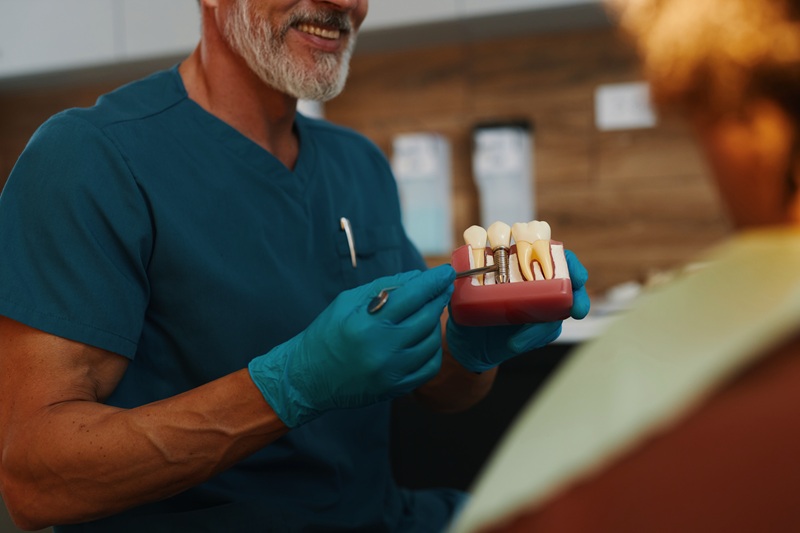
Dental implants are small titanium fixtures that are surgically placed into the jawbone to act as an artificial tooth root. Titanium is used because it is biocompatible, meaning the body accepts it well. Over time, the implant fuses with the surrounding bone through a natural process called osseointegration. This creates a stable, secure foundation onto which a dental restoration (such as a crown, bridge, or denture) can be attached.
The end result is a replacement tooth that is fixed in place, functions like a natural tooth, and is designed to blend in seamlessly with the rest of your smile.
Unlike removable options such as dentures, a dental implant becomes a permanent part of your mouth’s structure. That’s what makes it such a meaningful permanent tooth replacement solution for so many patients.
What Are Dental Implants Used For?
The most straightforward answer is that dental implants are used to replace missing teeth. But the reasons a person might need a missing tooth replacement are broader than many people realise.
Single tooth replacement
A single tooth implant topped with a custom-made crown can restore both the appearance and function of a lost tooth without affecting the teeth on either side. This is one of the most common uses of implant treatment and one of the clearest benefits of dental implants for patients who’ve lost just one tooth.
Multiple missing teeth
Implants can also support bridges to replace several missing teeth in a row, without the need to alter or rely on neighbouring healthy teeth as anchors.
Supporting dentures
For patients who require a full arch of teeth, implants can be used to stabilise a denture securely in place, offering a more comfortable and confident alternative to traditional removable dentures.
Preserving jawbone health
When a tooth is lost, the jawbone in that area no longer receives the stimulation it needs to maintain its density. Over time, this can lead to gradual bone loss, which affects both oral health and facial structure. Because a dental implant sits within the jawbone like a natural tooth root, it helps to maintain that stimulation and support long-term bone preservation, one of the most significant benefits of dental implants that often goes overlooked.
How Does the Dental Implant Procedure Work?
Tooth implant treatment is typically carried out in stages, with healing time built in between each phase. Here’s a general overview of what to expect:
1. Initial Consultation and Assessment
Your journey begins with a thorough assessment of your oral and general health. This will usually include X-rays or 3D imaging to evaluate the condition of your jawbone and determine whether implants may be a suitable restorative dental option for you. Your medical history and lifestyle factors will also be taken into account.
2. Implant Placement
If you’re assessed as a suitable candidate, the titanium implant is placed surgically into the jawbone under local anaesthesia. This is followed by a healing period that typically goes for several weeks to a few months, during which osseointegration takes place and the implant bonds with the surrounding bone.
3. Abutment Attachment
Once healing is confirmed, a small connector piece called an abutment is attached to the implant. This acts as the link between the implant itself and the final restoration.
4. Placement of the Final Restoration
A custom-made crown, bridge, or denture is then fitted onto the abutment. This restoration is designed to match the colour, shape, and size of your natural teeth for a result that looks and functions naturally.
It’s worth noting that every dental implant case is unique. That’s why treatment timelines, healing periods, and the specific steps involved can vary from person to person. A thorough consultation is advised before any treatment begins.
Who May Be Suitable for Dental Implants?
Dental implants are not a one-size-fits-all solution, and not everyone is automatically a candidate. A number of factors are taken into consideration during assessment, including:
- The presence of one or more missing teeth
- Good general and oral health
- Sufficient jawbone density to support the implant (or suitability for bone grafting where needed)
- No uncontrolled health conditions that could affect healing
- A commitment to maintaining good oral hygiene and attending regular dental visits
Age is also a consideration, as implants are generally not recommended until the jaw has finished developing, making them more appropriate for adults in most cases.
If you’re unsure whether you might be a suitable candidate, the best place to start is a professional consultation with a qualified implant dentist who can assess your individual situation.
Your Journey to a Complete Smile
Missing teeth do not have to be a permanent part of your story. Whether you’ve been living with a gap for years or you’re only just beginning to explore your options, dental implants could be the long-term solution that gives you back the comfort, confidence, and function you deserve.
If you want to know more about dental implants or want to know if they are appropriate for you, our dentists at Greenslopes Dental Studio will help you understand and be guided.
Talk with our dentists by booking an appointment.
Frequently Asked Questions
What exactly are dental implants?
Dental implants are small titanium fixtures surgically placed into the jawbone to serve as an artificial tooth root. Over time they fuse with the bone through osseointegration, providing a stable base for a crown, bridge, or denture to be attached on top.
What is the dental implant procedure like?
The dental implant procedure is carried out in stages: an initial assessment and imaging, surgical placement of the implant, a healing period for osseointegration, attachment of an abutment, and finally placement of the custom restoration.
The process can span several months to allow for proper healing between stages.
Is a dental implant a permanent solution for missing teeth?
Dental implants are designed to be a long-term, permanent tooth replacement solution. With proper oral hygiene and regular dental check-ups, they can last for many years, and in some cases, a lifetime.
The restoration on top (such as a crown) may need to be replaced over time with normal wear, but the implant itself is built to last.
Does the dental implant procedure hurt?
The placement procedure is carried out under local anaesthesia, so discomfort during surgery is minimised. Some tenderness and mild swelling in the days following placement is normal and manageable. Your dental team will provide clear aftercare guidance to support your recovery.
Am I a suitable candidate for dental implants?
Suitability depends on a range of factors, including your general and oral health, jawbone density, and lifestyle. The best way to find out is through a professional consultation where your dentist can assess your individual circumstances and discuss whether implants may be an appropriate option for you.
How do I look after my dental implant once it’s in place?
Care for your implant much like you would your natural teeth: brush twice daily, floss regularly, use an interdental brush around the implant site, and attend your dental check-ups as recommended. Avoiding smoking and limiting alcohol also supports the long-term health of your implant.
How much do dental implants cost?
The cost of tooth implant treatment varies depending on the complexity of your case, the number of implants required, and your individual treatment plan. At Greenslopes Dental Studio, we offer flexible payment plans and are happy to walk you through all costs clearly during your consultation.

