

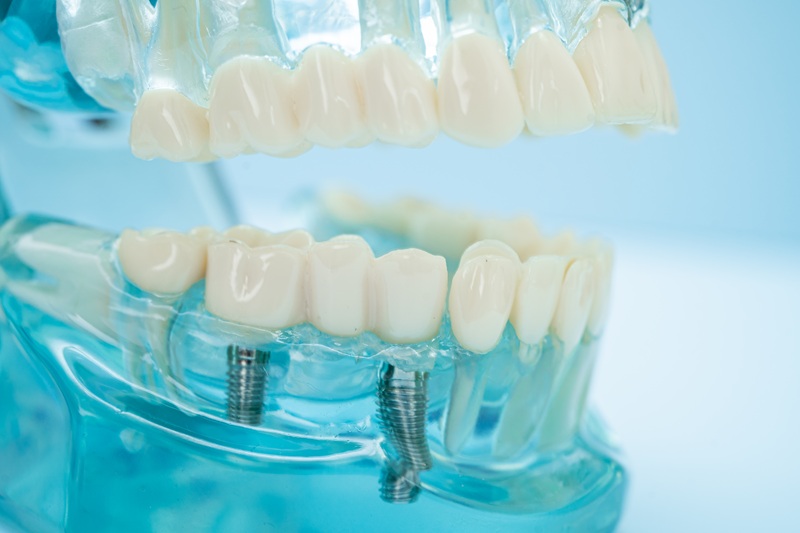
If you’re missing most or all of your teeth or you’ve been managing with removable dentures and wondering whether there’s a more stable, long-term solution — you may have come across the term “All-on-4 dental implants.” It’s one of the more significant advances in modern restorative dentistry, and it’s worth understanding properly before you decide whether it might be right for you.
This guide explains what All-on-4 dental implants are, how the treatment works, who it may be suitable for, and what you can realistically expect from the process.
What Are All-on-4 Dental Implants?
All-on-4 is a full arch dental implants treatment designed to replace an entire arch of missing teeth using just four strategically placed dental implants as the foundation.
The name refers to the concept itself: a full set of teeth supported by four implants. Rather than placing an individual implant for every missing tooth, the All-on-4 treatment uses four anchor points to support a complete fixed implant bridge that spans the entire arch. The result is a full row of permanent teeth replacement that looks, feels, and functions much more like natural teeth than traditional removable dentures.
It’s important to understand that All-on-4 is a complex, involved treatment, so it’s worth working only with an experienced, qualified dental team. At Greenslopes Dental Studio, the treatment is led by a dentist with extensive experience in dental implant surgery, so patients are in capable, dedicated hands throughout the process.
How Do All-on-4 Dental Implants Work?
Understanding how All-on-4 works starts with the placement of the implants themselves.
Two implants are positioned at the front of the jaw, and two are placed at the back at a specific angle. This angled placement is a key feature of the All-on-4 approach. By tilting the rear implants, the treatment is able to engage a larger surface area of available bone, which can reduce or eliminate the need for bone grafting in many cases.
This is particularly relevant for patients who have experienced some degree of bone loss following tooth loss, a common occurrence when teeth have been missing for an extended period.
Once the implants are placed, they integrate with the jawbone through osseointegration, the same natural bonding process used in all dental implant procedures. When this healing is complete, a custom-made full-arch prosthetic bridge is securely attached to the four implants.
In some cases, a provisional restoration may be placed on the same day as surgery. It’s worth noting that the final permanent bridge is fitted after the healing and osseointegration period is complete.
How Is All-on-4 Different from Traditional Dental Implants?
With traditional dental implant procedures, each missing tooth is typically replaced with its own individual implant. For a patient replacing multiple missing teeth, this can mean a significant number of implants, a longer overall treatment timeline, and, in some cases more extensive bone grafting requirements.
The All-on-4 treatment streamlines this process for patients who are replacing multiple missing teeth across a full arch. By using just four implants to support an entire fixed implant bridge, the treatment can be more efficient in terms of both time and the amount of surgical intervention required.
The right approach depends entirely on your individual oral health needs, bone structure, and clinical circumstances. This is something your dental team will assess in detail during your consultation.
How Does All-on-4 Compare to Removable Dentures?
For many patients, the comparison that matters most is between All-on-4 and traditional removable dentures. The two are fundamentally different in how they work and what they offer.
Traditional dentures sit on top of the gum and rely on suction or adhesive to stay in place. While they are a practical solution for many people, they can shift during eating or speaking, require removal for cleaning, and, over time, can contribute to gradual bone loss and changes in facial structure.
On the other hand, all-on-4 implant-supported dentures are fixed in place and do not need to be removed. Because the implants are anchored in the jawbone, they provide the stimulation needed to help preserve bone density over time.
Patients typically find that chewing, speaking, and everyday comfort are significantly improved with a fixed solution compared to removable alternatives.
Who Might Be Suitable for All-on-4 Treatment?
All-on-4 dental implants may be worth exploring if you:
- Have lost most or all of your teeth in the upper or lower arch
- Are looking for a fixed, non-removable alternative to dentures
- Are in good general and oral health
- Have sufficient bone structure, or are assessed as suitable for implant placement
- Want a full mouth restoration with a coordinated, specialist-led approach
However, it’s important to know that suitability is determined through a thorough consultation, including diagnostic imaging and a full health assessment. Not everyone is automatically a candidate, and the process of determining whether All-on-4 is appropriate for your situation is an important first step.
What to Expect During the Process
Here’s a general overview of how the All-on-4 treatment journey typically unfolds:
Consultation and Planning
A comprehensive assessment is carried out, including 3D imaging to evaluate bone volume and anatomy. This allows your dental team to plan the precise placement of each implant with accuracy.
Implant Surgery
The procedure includes placing local anaesthesia in the area. A provisional bridge may be attached on the same day in appropriate cases, allowing you to leave the clinic with a functional set of teeth while osseointegration takes place.
Healing Period
The implants need time to fully integrate with the jawbone. This period typically spans several months and is an important phase that should not be rushed.
Final Bridge Placement
Once healing is confirmed, the permanent custom-made bridge is attached to the implants, completing your full mouth restoration.
Your dental team will provide detailed guidance at every stage, including what to eat during recovery, how to care for your provisional teeth, and when to attend follow-up appointments.
Find Out If All-on-4 Is Right for You
Living with multiple missing teeth does not have to be your long-term reality. All-on-4 dental implants may offer a fixed, permanent teeth replacement option that can meaningfully restore both your oral function and your confidence.
To know if you’re suitable for the all-on-4 dental implant procedure, our experienced team at Greenslopes Dental Studio is here to discuss your concerns and help you explore whether this treatment is the right fit for your needs.
Book a consultation to know more.
Frequently Asked Questions
What are All-on-4 dental implants?
All-on-4 is a full arch dental implants treatment that uses four implants to support a complete fixed bridge of replacement teeth. It’s designed for patients who have lost most or all of their teeth in one or both arches and are looking for a permanent, non-removable solution.
How do All-on-4 dental implants work?
Four titanium implants are placed in the jawbone: two at the front and two angled at the back. This strategic placement allows the implants to support a full arch prosthetic bridge without requiring an individual implant for each missing tooth, and often reduces the need for bone grafting.
Is All-on-4 the same as same-day teeth replacement?
In some cases, a provisional restoration can be placed on the day of surgery, allowing patients to leave the clinic with teeth in place. However, the final permanent bridge is fitted after the implants have fully integrated with the jawbone, which takes several months. Your dentist will advise whether same-day provisional teeth are appropriate for your case.
How is All-on-4 different from regular dental implants?
Traditional dental implants typically replace individual missing teeth one at a time. All-on-4 is designed for full arch replacement, using just four implants to support an entire bridge, making it a more streamlined option for patients replacing multiple missing teeth across a whole arch.
How does All-on-4 compare to removable dentures?
Unlike removable dentures, All-on-4 implant-supported dentures are fixed permanently in place. They don’t need to be removed for cleaning, do not rely on adhesives to stay in position, and help preserve jawbone density over time by stimulating the bone. Something removable dentures cannot do.
Who is a suitable candidate for All-on-4 treatment?
Suitable candidates are generally those who have lost most or all teeth in an arch, are in good general and oral health, and have adequate bone structure for implant placement. A thorough consultation including imaging is required to determine suitability on a case-by-case basis.
How long does All-on-4 treatment take?
The overall timeline varies depending on individual healing and treatment needs, but the process typically spans several months from initial placement through to the fitting of the final bridge. Your dental team will give you a clear picture of the expected timeline during your consultation.

