

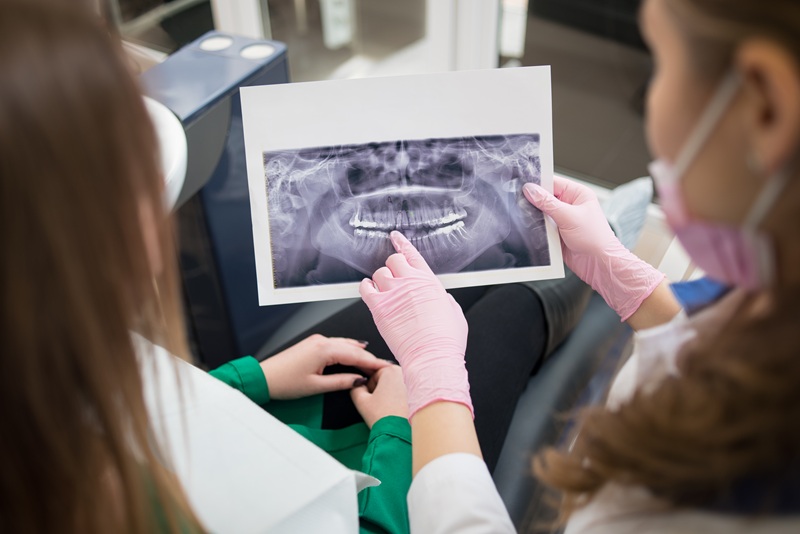
When you visit the dentist for a routine check-up and clean, you might be asked to have X-rays taken before your examination begins. For some patients, this can raise questions like, ‘why are they needed if everything feels fine? Do I really need them every time?’
Dental radiology, or dental X-rays during check-ups, are one of the most valuable preventive dental examination tools available. They allow your dentist to see what’s happening beneath the surface of your teeth and gums, and areas that simply can’t be assessed with the naked eye.
Understanding why dental X-rays are needed can help you feel more informed and comfortable the next time you’re asked to have them taken.
What Can Dental X-Rays Reveal?
A visual examination can only tell your dentist so much. Many dental issues develop in areas that are not visible during a standard check-up, like in between teeth, beneath existing fillings, along the roots, or within the jawbone itself. This is where dental imaging for oral health becomes essential.
Some of the key things routine dental radiographs can help detect include:
- Cavities between teeth — Detecting cavities with X-rays is one of the most common reasons X-rays are taken. Decay that forms between teeth or under the gum line often can’t be seen or felt until it has progressed significantly.
- Hidden tooth decay — X-rays for hidden tooth decay can reveal early-stage damage beneath the enamel or under existing restorations, allowing your dentist to intervene before the problem grows.
- Bone loss — Monitoring teeth and bone health is particularly important for patients with gum disease. X-rays can show whether bone levels around the teeth have changed, which is critical for planning appropriate treatment.
- Infections and abscesses — Infections at the root tip of a tooth may not cause obvious symptoms in the early stages, but they can be clearly identified on an X-ray.
- Impacted or developing teeth — X-rays help identify teeth that are trapped beneath the gum, growing at an angle, or not erupting as expected, particularly relevant for wisdom teeth and children’s dental development.
Without this level of visibility, some conditions could go undetected for months or even years, making them more complex and costly to treat by the time they are discovered.
Common Types of Dental X-Rays
Not all dental X-rays are the same. The type your dentist recommends will depend on what they are looking for and your individual oral health needs.
- Bitewing X-rays — These are the most common type taken during a routine dental X-ray procedure. Bitewing X-rays at the dentist capture the upper and lower back teeth in a single image, making them ideal for detecting decay between teeth and checking the fit of existing restorations.
- Periapical X-rays — These focus on one or two teeth from crown to root tip, providing a detailed view of the entire tooth structure. They are particularly useful for identifying infections, root fractures, or bone loss around a specific tooth.
- Panoramic X-rays (OPG) — A panoramic image captures your entire mouth in a single wide-angle shot, including all teeth, the jawbone, sinuses, and jaw joints. This type of imaging is often used for treatment planning, assessing wisdom teeth, or evaluating overall jaw health.
- Cone Beam CT (CBCT) — For more complex cases, a 3D scan provides detailed cross-sectional images of your teeth, bone, and surrounding structures. This is commonly used in dental implant planning and surgical assessments.
At Greenslopes Dental Studio, our in-house radiology suite includes both OPG and CBCT imaging, meaning patients can have advanced diagnostic imaging done on-site without needing a separate referral to an external facility.
How Often Do You Need Dental Radiology?
There’s no one-size-fits-all answer to this. How frequently your dentist recommends X-rays depends on factors like your age, oral health history, risk of decay, and whether there are any specific concerns being monitored.
For most adults with generally good oral health, bitewing X-rays are typically taken once every one to two years as part of a routine check-up. Patients with a higher risk of decay, active gum disease, or ongoing treatment may need them more frequently. Children and teenagers may also require X-rays more regularly to monitor developing teeth and jaw growth.
Your dentist will always weigh the clinical benefit against the exposure and only recommend X-rays when there’s a genuine need. Modern digital X-ray equipment, like the systems used at Greenslopes Dental Studio, produces significantly lower radiation than older film-based technology, making the dental X-ray procedure both quick and low-risk.
Are Dental X-Rays Safe?
This is one of the most common concerns patients raise, and it’s a valid question.
The short answer is that dental X-rays today involve very low levels of radiation, far less than many people assume. A single bitewing X-ray exposes you to roughly the same amount of background radiation you’d encounter during a short domestic flight.
Digital X-ray technology has reduced radiation exposure even further compared to traditional film-based imaging. Protective measures like lead aprons and thyroid collars are also used to minimise exposure to other parts of the body. For the vast majority of patients, the diagnostic benefits of routine dental radiographs far outweigh the minimal risk involved.
If you have specific concerns, for example, if you’re pregnant or have had recent medical imaging, always let your dentist know to receive a more personalised approach to your case. They can adjust the timing or type of X-rays recommended based on your circumstances.
Early Detection Starts Beneath the Surface
The real value of dental X-rays lies in the early detection of dental problems. A cavity identified early might only need a simple filling. However, when the same cavity is left undetected, it could eventually require a root canal or extraction.
Dental X-rays are not about unnecessary procedures. They are about giving your dentist the complete picture they need to care for your oral health properly.
If you’re looking for a dental clinic in Brisbane that is comprehensive enough to offer dental X-rays, the team at Greenslopes Dental Studio is here to help. We believe every patient deserves clear, honest information about their care, and that starts with understanding the tools we use to keep your smile healthy.
Book a consultation with our team today for guidance and support.
Frequently Asked Questions
Are dental X-rays really necessary during every check-up?
Not always. Your dentist will recommend X-rays based on your individual risk factors and oral health history. Some patients may need them annually, while others with stable oral health may only need them every couple of years.
Do dental X-rays hurt?
No. The process is quick and painless. You’ll simply bite down on a small sensor or film for a few seconds while the image is captured. Digital X-rays are particularly fast and comfortable.
Are dental X-rays safe during pregnancy?
Dental X-rays involve very low radiation levels, and modern digital equipment reduces this further. However, most dentists prefer to postpone non-urgent X-rays during pregnancy as a precaution. Always let your dental team know if you’re pregnant or think you might be.
What’s the difference between an OPG and a regular dental X-ray?
A regular dental X-ray (like a bitewing) captures a small section of your mouth in detail. An OPG is a panoramic image that shows your entire mouth, including all your teeth, jawbone, and surrounding structures. All of which in a single wide-angle shot.
Can dental X-rays detect gum disease?
X-rays can reveal bone loss around the teeth, which is a key indicator of gum disease progression. While the gum tissue itself isn’t visible on an X-ray, the bone changes beneath it are, making X-rays an important tool for monitoring periodontal health.

