

Dental treatments are talked about more than ever, yet confusion has never been higher.
Social media trends, overseas advertising, and second hand stories often blur the line between fact and exaggeration. As a result, many people delay or avoid care based on assumptions that are no longer accurate or were never true to begin with.
This article brings together the most common myths surrounding veneers, teeth whitening, Invisalign, and sedation dentistry. The aim is not to promote treatment, but to clarify what these options realistically involve so decisions are based on understanding rather than fear or hype.
Veneers myths that often lead to hesitation
One of the most persistent beliefs is that veneers automatically damage natural teeth. In reality, veneers are not a one size fits all treatment. For suitable cases, only minimal enamel adjustment may be required and in some situations no drilling is needed at all. Problems tend to arise when veneers are used to cover issues such as decay, gum disease, or bite problems rather than addressing those concerns first.
Another common myth is that veneers last forever. Veneers are durable, but they are not permanent. Like fillings or crowns, they experience wear and tear over time. Their lifespan depends on factors such as bite forces, grinding habits, oral hygiene, and regular dental reviews. Understanding this helps people plan realistically rather than expecting a once only solution.
Teeth whitening myths that cause confusion
A frequent concern is that whitening weakens or damages enamel. When professionally guided and used appropriately, teeth whitening works by breaking down stain molecules rather than removing tooth structure. Issues usually occur when products are overused, poorly fitted, or used without understanding sensitivity risks.
Many people also believe whitening delivers the same result for everyone. Tooth colour is influenced by genetics, age, medication history, and the type of staining present. Whitening will not change the colour of existing fillings, crowns, or veneers. Managing expectations before treatment is far more important than chasing the brightest possible shade.
Invisalign myths that stop adults from asking questions
There is a widespread assumption that Invisalign is only suitable for minor cosmetic concerns. In reality, clear aligners can address a range of alignment and bite issues, depending on complexity. They are not limited by age, but by suitability.
Another myth is that orthodontic treatment is purely cosmetic. Tooth alignment affects how teeth wear, how easily they can be cleaned, and how the jaw functions over time. Many adults seek Invisalign to improve comfort, reduce uneven wear, or make hygiene easier rather than for appearance alone.
Sedation dentistry myths that increase anxiety
One of the most misunderstood topics in dentistry is sedation. Many people believe sedation means being fully unconscious. Most dental sedation involves a deeply relaxed state where patients remain responsive but calm, with little memory of the procedure. This is very different from general anaesthesia.
There is also a belief that sedation is only for people with extreme dental fear. In practice, it may also be considered for long procedures, strong gag reflexes, difficulty sitting comfortably, or previous challenging dental experiences. Sedation is always assessed individually and is not automatically required or offered.
The myth of the quick cosmetic fix
Modern dentistry is often portrayed as instant and effortless. While technology has improved comfort and efficiency, there are no shortcuts that bypass biology. Treatments such as Invisalign, whitening, and veneers often work best when planned in a specific sequence.
Alignment may need to be addressed before cosmetic work. Whitening is often done before matching restorations. Rushing this process can compromise both function and longevity. Thoughtful planning focuses on outcomes that last, not just immediate visual change.
Why myths persist in dentistry
Dental myths often stem from outdated information, overseas marketing, or isolated negative experiences shared widely. What worked or failed in one situation does not apply universally. Dentistry is highly individual, and recommendations should always be based on clinical assessment rather than trends.
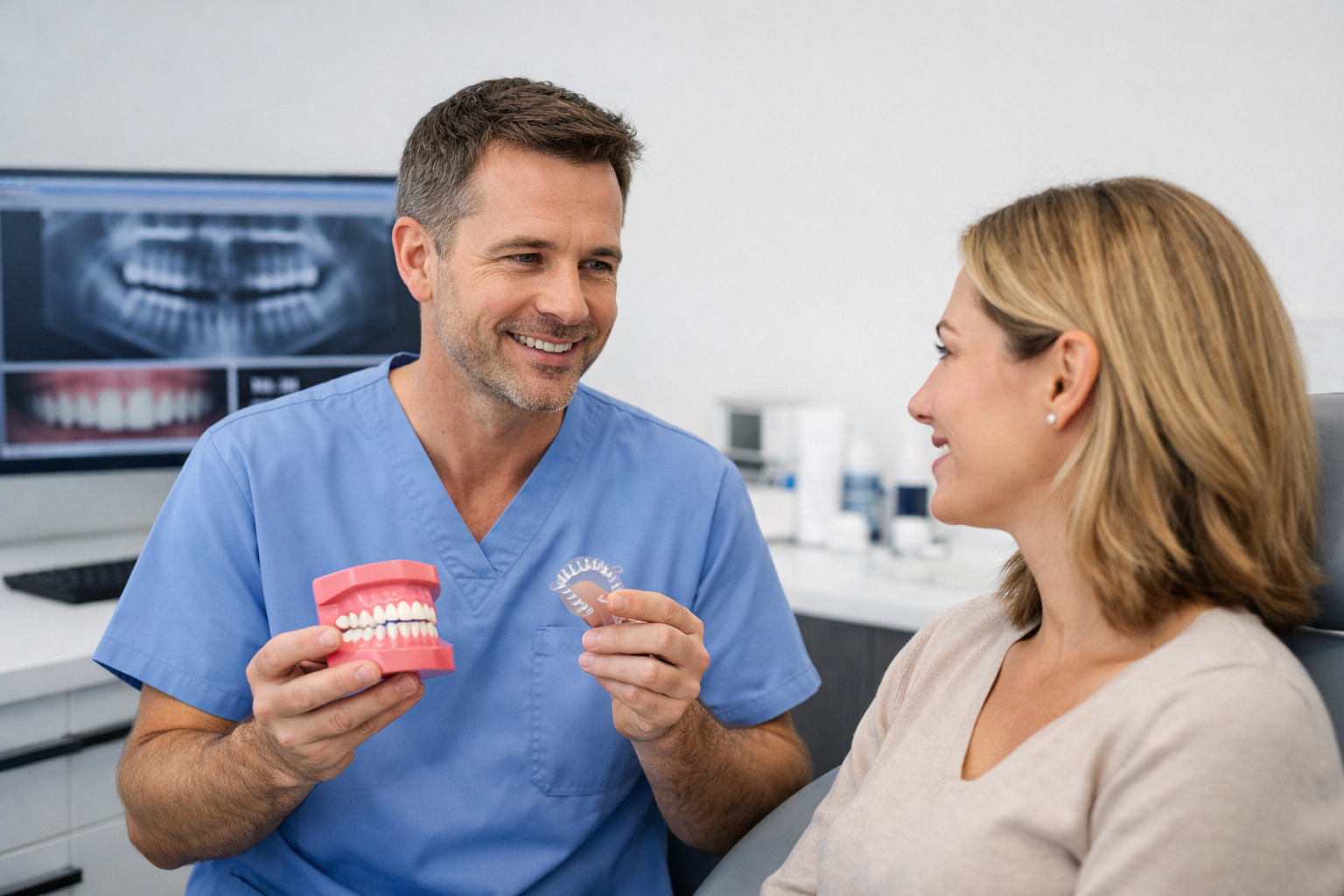
The most important step patients can take is asking questions and expecting clear explanations. A good consultation should include benefits, limitations, alternatives, and maintenance requirements, not just ideal outcomes.
Make confident dental decisions
Choosing dental care should feel informed rather than rushed. Understanding what a treatment can and cannot do helps align expectations and reduces regret. Avoid decisions based on social media transformations or blanket claims. Veneers, teeth whitening, Invisalign, and sedation dentistry all have a place when used appropriately. Separating fact from fiction allows these options to be considered calmly and realistically.
Clear information leads to better choices, better experiences, and better long term oral health.

